Showing posts with label Montsant. Show all posts

2016/05/18

Falset Wine Fair

Falset, Priorat's capital, with some 2'800 people, is not exactly a large metropolis, but has a charming old quarter and is, above all, the hub of a fascinating wine zone. Well, two.

Falset is the political capital of the Priorat comarca, a unit similar to a county or canton. Within the Priorat comarca we can find the DO Montsant and the DOQ (Denominaciò d'Origen Qualificada) Priorat. Most of Falset ground is in Montsant DO.

In the first weekend in May, Falset hosts the Fira del Vi on Saturday and Sunday, a public tasting where many wineries of both zones pour their wines, along with many activities for the whole family.

Interesting as this is, allowing to sample many wines, a number of parallel, more focused events in Falset or the surrounding villages easily steal the show. I have already mentioned some of them in previous posts, but I think that a general overview is needed.

Friday evening is the starting point.

At Capçanes the cooperative organizes the Garnatxa Night, with their own Garnatxa wines and others from guest wineries (DO Terra Alta this year), together with live music and tapes from nearby Michelin-starred restaurants.

At Falset takes place the only white wine event. After all, most of the Priorat & Montsant wine is red. But still two prestigious wine shops in Falset, Aguilo Vinateria and Vins i Olis del Priorat, convene most of the whites from the comarca and a handful of guests from other places. Oysters and artisan cheeses are offered along with the wines.
Still on Friday evening, at Porrera Carinyena wines are the star. This village has excellent old-vine Carinyena plots, but most of the wine coming from them reaches the market as blends with Garnatxa or other grapes. In the Tast de Carinyenes tasting, wineries pour the unblended Carinyena wines, usually from unlabeled bottles just filled from the barrels. All this in the town square, with a cold buffet available. This is really my favorite tasting of the weekend, as it offers wines that can not be found elsewhere, and the quality and variety (for such a small village) are stunning.

On Saturday morning, the Gratallops restaurant Les Figueres hosts the Tast amb Dones, or Tasting with Women, which is in fact a tasting of wines made by women oenologists (do not get the wrong ideas). A number of interesting wineries are represented.
Also on Saturday morning, and this year for the first time, Poboleda wines are on show in the premises of the Perinet winery.

On Saturday late afternoon, another of the classic tastings: Tast amb Llops, featuring the wines from some of the top wineries in Gratallops and organized by the Cal Llop (house of the Wolf) hotel. This is the event to taste wines from the Priorat pioneers: Perez, Barbier, Palacios, Glorian.

And on Saturday night, the Hotel Mas Figueres at Marçà puts together Vi de Nit, a dinner-cum-tasting usually featuring an impressive roll-call of Priorat and Montsant wineries, giving the best overview of the comarca output. If I had to take somebody to an introductory tasting of these two zones' top wines, this would be it.

A simpler, more relaxed alternative is to be found in Vi-Night at Les Figueres in Gratallops: tapes, wines and music.
On Sunday morning, and in the beautiful halls and terraces of the Cal Compte Hotel in Torroja, there is an event where the main features are the wines from the village. But also the two other archetypal Mediterranean crops are tasted in parallel: hand-made breads and Extra Virgin olive oils from the zone, often produced in small quantities by the wineries themselves.

The other event on Sunday morning is the Tast de les Mines (Tasting of the Mines), which ows its name to the mines that used to be worked in Bellmunt del Priorat. That is a vertical tasting of three vintages of the main wines from Bellmunt, El Molar and El Lloar.

On Sunday afternoon there are no significant events.

Not all wineries are present in the events. We must remember that in many cases they are family run, and they are spread thin in this weekend.

In most of the tastings live music is played and selected food is offered, apart from those that include dinner outright. It is also common that a few wineries from other zones are invited.

Which are my favorites? My schedule in the last editions has been Tast de Carinyenes, Tast amb Dones, Tast amb Llops, Vi de Nit, and Cal Compte, although I always have doubts about missing other events.

This is really a hectic weekend, tasting some 100 - 150 wines, but the opportunity is too difficult to resist, and I can only recommend it warmly to anybody with the desire to delve into Priorat and Montsant.


2016/04/27

Hi there!

After more than four years of silence, I am happy to write here again. It is not that my passion for wine has decreased. Neither the interest of Catalan wine has dropped; far from it. But I have had a considerably complex time since then, from the professional point of view, including relocating from Barcelona to Basel, Switzerland. As my family has stayed in Barcelona, I have now to take care of many things (shopping, cleaning, cooking...) that were before family business - or, to be frank, my wive's😚!

Even commuting to Barcelona to be with my family on most weekends, my available time for winery visits and tastings has been greatly reduced. Nevertheless, I want to restart blogging my experiences and opinions, such as they may be. I hope to make them interesting for anybody that is kind enough to read them.

I will perhaps focus less on wine descriptions and more on wineries and wine people. Anybody using the Vivino app can find under Joan Massana my tasting notes, now over 800.

Other areas of interest come up. I now live less than one kilometer away from Alsace, although the vines may be a little further afield. Also the German Baden region is at hand. And Switzerland, unknown to many people, is home to many quality wineries, often using obscure grapes that render personal, unconventional wines that the Swiss, shrewd and knowledgeable, tend to keep to themselves. Now and then, I may drop a post about these areas where I am still feeling my way.

My first post will be about the Falset wine fair, due next weekend. It is the best way to feel the' pulse of Priorat and Montsant: three days packed with events, good food and fund. A great introduction to one of the world's most remarkable wine zones, its wines and their makers.

I only want now to apologize to the hardy souls that have been fruitlessly visiting this site in the last years. I will do my best to repay them!

2011/09/08

Wine in restaurants 1.4: wines in Mas Mariassa


This year’s holidays we did not fly abroad, but rather spent ten days in a small hotel (seven rooms) in the Catalan countryside. Mas Mariassa, a former farmhouse perched in the Serra de Llaberia hills that separate Priorat from the Mediterranean, is a haven of peace and silence. The nearest village, Pratdip, with picturesque remains of walls and castle, was haunted by vampire dogs (the dips) in the Middle Ages, until heavenly intervention rid the village of the scourge-or so say the legends. Anyway, the dogs in Mas Mariassa showed no vampirical inclinations, but were extremely friendly.

Not a vampire!

I can recommend Mas Mariassa for the place, the nice premises, the excellent cooking, and the personalized, professional service, but this blog’s focus is on wine. The wine list is a very good introduction to the wine zones around the hotel (DOQ Priorat and DOs Tarragona, Montsant, and Terra Alta), featuring a nice blend of well known warhorses and more independent, out of the way wines. In addition, a sprinkling of interesting wines from other zones.


Francesc, the owner and chef, is very knowledgeable and gives sound advice. Good glasses and prompt decanting in many cases. Temperature perhaps a little on the warm side.

We enjoyed several remarkable bottles, including a Cava one while in the candle-lit outdoors Jacuzzi, late after dinner under the stars and with strawberries. Here some details about them.


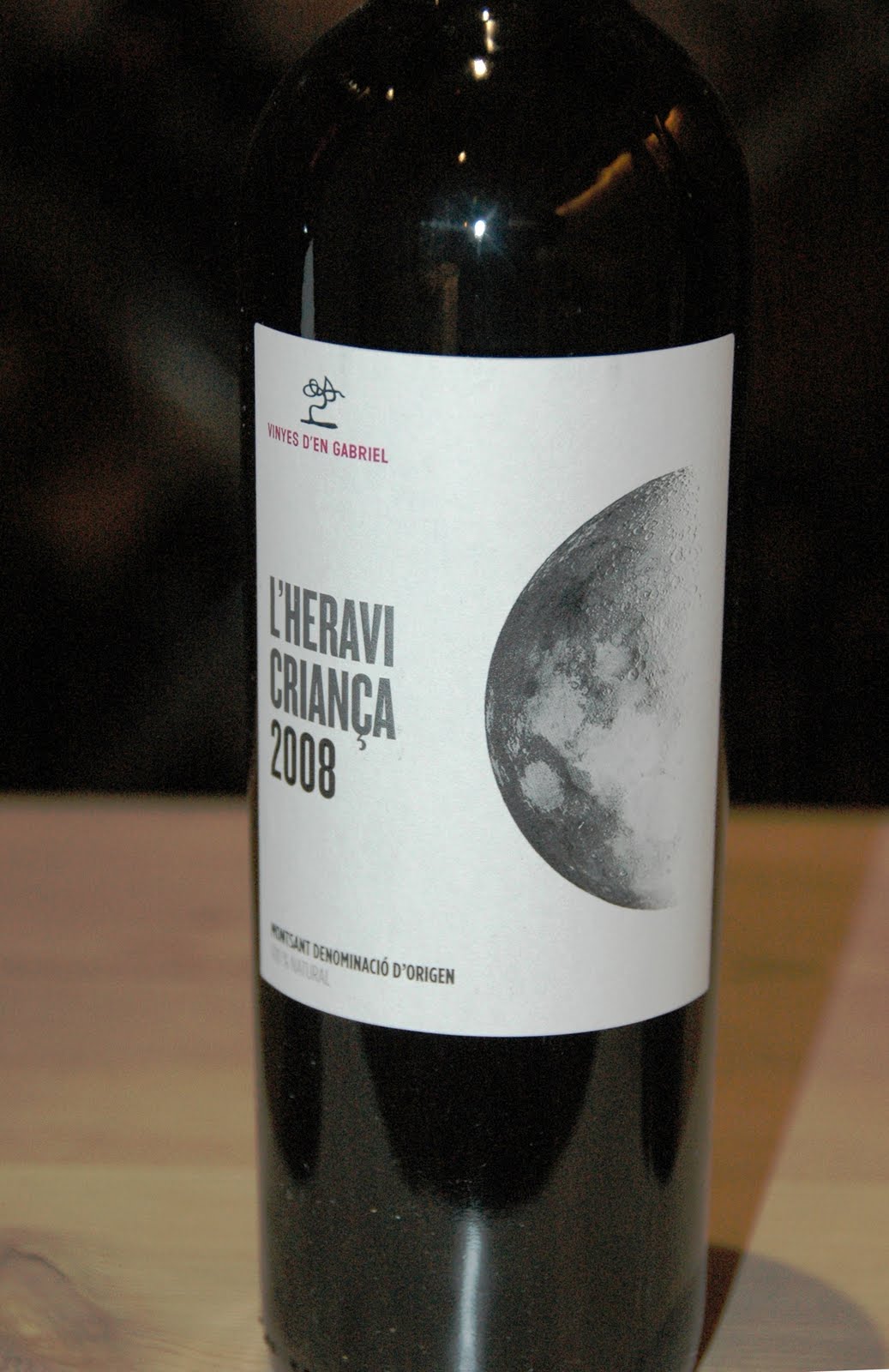
L’Heravi criança from the Vinyes d’en Gabriel winery in DO Montsant is a blend 50/50 of old vine Garnatxa and Carinyena, organically farmed. After one year in oak, l’Heravi is deep cherry red, with red fruit still dominant over cedar and spicy notes. Fruity and well balanced in the mouth.


From the relatively undistinguished DO Tarragona, Serra de Llaberia is a winery not far from the hotel. A family project. Their Elisabeth 2003 red has mainly Cabernet Sauvignon and Merlot, with a little Garnatxa and Syrah. Twelve months in French oak. Deep red, shows little evolution in the rim. Ripe red fruit in the nose, cocoa and balsamic herbs. Big in the mouth, with well-rounded tannins and long. A Pleasant surprise.


Clos Nelin is one of the greatest whites of Priorat. Crafted by the master hand of René Barbier of Clos Mogador, he mixes, on a base of Garnatxa blanca, small parts of Viognier, Macabeu, Pinot Noir, Marsanne, Escanyavelles, Roussanne and Pedro Ximénez. The varietals are processed separately and in different types of container (stainless steel, concrete, oak) and aged for nine months. Pale yellow, with noticeable legs, shows a very full palette in the nose: white flowers and fruits, the mineral touch of Priorat, citrics, butter, hazelnuts. All these come again in the mouth, with a velvety yet crisp sensation.


Another interesting Montsant was Terròs, from La Cova dels Vins of winemaker Sisco Perelló. Garnatxa, Carinyena and Syrah aged for fourteen months in French oak, giving a deep cherry red wine, with lots of red fruit, minerality and tobacco and leather notes. Wide and long in the mouth.


The Cava in the Jacuzzi was Agustí Torelló Mata Gran Reserva. The testing conditions were not what could be termed scientific, but this is a great wine from one of the best Cava producers. A Brut Nature with no less than 36 months of ageing, and from a blend of the three classic Cava grapes: Macabeu, Xarel•lo and Parellada. Comparatively light and flowery (for a Gran Reserva), perfect for the moment.


A perfect place to make trips to the wine zones around and then relax and, with a good dinner, enjoy a nice bottle.

http://www.doterraalta.com/#/home
http://www.doqpriorat.org/eng/index.php
http://www.crcava.es/catala/flash.html
http://www.serradellaberia.com/?page=portada&idioma=en
http://www.agustitorellomata.com/en/
http://www.vinyesdengabriel.com/


2011/06/05

Lo Jaume's wines at Topik

Ten days later, in the Topik restaurant in Barcelona, I had another pairing led by Lo Jaume.

Topik is a restaurant with a blend of Catalan and Japanese cuisine. The owner, Adelf, having trained in Japan for some time, is able to dish out surprising combinations and a master rice cook.

The wine list shows a fair balance of Catalan and rest of the world wines, with many well chosen labels from small producers or less-than-glamorous zones. Prices are perhaps at a 50% premium over wine shops. Adequate service and glasses.


The white Vall Novenes blanc, from Algramar Celler in DO Terra Alta, was the first wine. A coupage of Garnatxa, Sauvignon blanc and Chenin, it was fruity and crisp.

The Parellada 100 % 2010 from Celler Carles Andreu, one of the leading wineries in DO Conca de Barberà, is rather unique. Parellada is often waved aside as the lesser part of the Cava trinity (Xarel.lo, Macabeu and Parellada). But properly grown, with lower yields, and using carbonic maceration and batonnage, this white shows a very fruity nose, acidity and creaminess in the mouth, and is a wine to have in mind.

From the same winery, Carles Andreu Rosat Brut, a rosé Cava with aging for fifteen months, made with Trepat, a red variety typical from Conca de Barberà that gives elegant, medium bodied, spice-scented wines. Perfect for the spicy dish it matched.


Later came Clònic 2008, a DO Montsant red from Celler Cedó Anguera. Carinyena, Cabernet and Syrah aged for eight months in new Allier oak. We tasted with the same dish Gènesi 2006, also from Montsant, the older brother to Petit Gènesi mentioned in the previous post. Old Garnatxa and Carinyena vines, aging for twelve months in French and Hungarian oak give a wine with more elegance but less structure than the Clònic.

The last course, rice with duck, also featured two reds. La Guinardera 2006 from Celler Balaguer Cabré is already described in my previous post. Celler Aixalà-Alcait from DOQ Priorat was represented by Destrankis 2009, Garnatxa and Carinyena with nine months in oak. Red fruit, chocolate, balance.

The sweet Algramar Dolç, again from Algramar Celler in Terra Alta, comes from overripe Syrah grapes, with a controlled fermentation and twelve months in oak. Not too sweet and with noticeable acidity.

An evening to remember; with a avocado-raw blue fin tuna-caramelized foie combination as culinary highlight and the balance of the wine choice.

http://www.domontsant.com/
http://bonviure.blogspot.com/
http://www.doterraalta.com/#/home
http://www.doqpriorat.org/eng/index.php
http://www.crcava.es/catala/flash.html
http://www.algramar.com/english/index.html
http://cellerbalaguercabre.blogspot.com/
http://www.cavandreu.com/en/index_en.html
http://www.vermunver-genesi.cat/en/qui_som
http://www.cedoanguera.com/english/history.html
http://pardelasses.blogspot.com/
http://www.topikrestaurant.es/index.php
http://elsvinsdeltopik.blogspot.com/

2011/05/28

Lo Jaume’s wines

Jaume Balaguer (Lo Jaume, The Jaume (James) in Western Catalan parlance) is a many faceted man. He runs Bonviure, a wine and delicatessen shop in Gratallops (Priorat), and Celler Balaguer Cabré, a boutique winery in the same village; helps in Piró, the family restaurant; and sells to restaurants and wine shops wines from a number of small Catalan wineries. Apart from these trifling tasks, he writes a blog and is great in proposing wine-food pairings. What he does in his spare time, such as it may be, is something I have never dared to ask him.

It is about this last capacity that I wanted to tell you about. After the Tast amb Llops, my wife and I attended a pairing in his restaurant. By (lucky) chance, a few days later I enjoyed a similar occasion in a restaurant in Barcelona. That will come in my next post, to allow proper labelling of wines tasted.

Piró is a restaurant serving mainly typical Catalan food. As you know, I do not comment on a restaurant’s food unless I am disappointed. This was not the case.


The wines we tasted were the following:

Les Brugueres 2009 is a 100% Garnatxa blanca white from La Conreria de Scala Dei, DOQ Priorat, with a light golden yellow colour. Intense in the nose, with white fruit notes. Well structured in the mouth, with good acidity, and very long.

Humilitat 2008 is a red coupage of Garnatxa and Carinyena, produced by vino, amor y fantasia. Medium bodied, with lighter colour and spicy nose, its winemakers claim to have produced “the Burgundy of Priorat”. Quite true, although not a Grand Cru.

Trio Infernal 1/3 2007 is a Priorat red from 60% Garnatxa and 40 % Carinyena by Trio Infernal. Black fruit, complex nose, powerful but fine tannins.

Petit Gènesi 2009, Garnatxa, Carinyena and Syrah coming from the Vermunver winery in DO Montsant. With six months in different oaks, the nose points to black fruit and balsamic notes. Fresh in the mouth, with adequate structure.

Last but not least, La Guinardera 2006 is a 100% Garnatxa from Celler Balaguer Cabré, owned by Lo Jaume. This is no nepotism; La Guinardera is an elegant, medium bodied wine that comes from the property of the same name, an old vine plot that receives sunshine the whole day. Red fruit in the nose, with tobacco notes. Silky and long.


A perfect end for a day that included the visit to the Falset Wine Exhibition and the Tast amb Llops. Ten days later I was to have another pairing with Lo Jaume; and I was indeed looking forward to it.


http://www.vermunver-genesi.cat/en/qui_som
http://cellerbalaguercabre.blogspot.com/

2011/05/10

Wines at Torrelles

The village of Torrelles de Llobregat, 20 km west of Barcelona in the first hills of the Garraf massif, is not famous for its wines; rather, its cherries (and those from the surrounding villages) are prized in the Catalan markets. However, and for the second time, David González (Vinoscopio) has gathered a group of winemakers in the Torrelles Wine Fair that amply reward inspection.

Up to four groups of wineries (apart from high quality beer, cheese, cold meats and pastry producers) were available: 
  • Natural wine producers 
  • Wineries from a selected “special guest” wine zone; from Torroja in Priorat this time 
  • Wineries represented by smallish wine distributors 
  • Other wineries collaborating with Vinoscopio
All producers were small, some of them still cutting their teeth, and giving a good representation of their terroir. David has a detailed knowledge of the grass-roots wine world, especially Catalan, and a fine nose to detect potential stars.
Unlike more publicized events, this fair has a human scale and allows a short chat with the winery representatives, usually the owner or winemaker, given the size of most enterprises. For an amateur like me, it is a great opportunity to learn and make useful contacts to visit later.

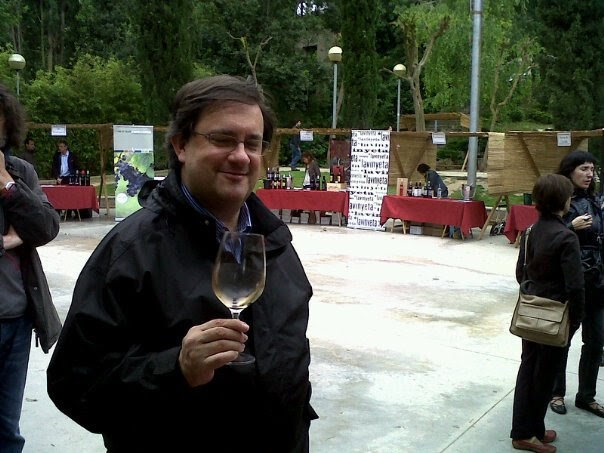
Happy me at the opening tasting Miliarium blanc
I had only three hours and could not taste all wines and meet all winemakers. But I certainly liked some enough to purchase a bottle to be able to enjoy them at home:

Cava Berdié, a young Cava winery in Castellví de la Marca with a modern approach based nonetheless in traditional grape varieties and managed by three enthusiastic siblings. 


Miliarium, an engaging public-private project in Ulldecona that pools vineyards no longer farmed by their owners (usually old people with no children interested in the wine world) and employs young people. In the able hands of oenologist Juan Manuel Gonzalvo, it is a project to track closely. 


Mas de la Caçadora, a Els Guiamets, Montsant winery with a wide range of wines; I especially liked their Garnatxa Blanca sweet wine and a most tasty, enjoyable rosè. 


Rampell, from Torroja, Priorat, the project of Cristian Francès, Trio Infernal oenologist, with a very personal Chenin blanc and also a striking red. 

Celler Aixalà-Alcait from Torroja, Priorat, with highly regarded red wines. 


Celler Sabaté Franquet from Torroja, Priorat, with their first wine, promising coming from young vines.


Llicorella Vins from Torroja, Priorat, with a range of three reds. I took a bottle of the most aged and complex, the one I liked best (perhaps I am aged and complex myself!). 


Celler Ronadelles, a biodynamic winery at Cornudella del Montsant, DO Priorat. I enjoyed especially their red from old vines and a sweet from Garnatxa roja.


There were other wineries I like, but these were for me the highlights of a fair with a very consistent level. Surely an event to write down in the agenda of the seeker of uncommercial, terroir driven wines, looking for nice surprises and a sound QPR.


http://www.doqpriorat.org/eng/index.php
http://www.domontsant.com/
http://www.cavaberdie.com/
http://pardelasses.blogspot.com/
http://www.llicorellavins.com/
http://www.masdelacasadora.com/index.php/en
http://www.ronadelles.com/en/index.php
http://www.adictosalalujuria.com/

2011/04/10

Gobe's friends

In the early eighties little Josep Barceló, still too young to read, would identify the peg to hang his coat on at his Priorat school by a drawing of a mushroom (“rovelló”) over it. In his childish speech, he would not pronounce the “r” sound properly, so his schoolmates promptly nicknamed him “govelló”, later shortened to Gobe.


Gobe grew up among his friends, meeting them also after school to play football (their team was called “La Xusma”, the rabble), and, later on, to share a bottle of wine. In due time, many of them worked in the world of wine; Gobe himself at the Celler de Capçanes, while planning to make wine from a small family vineyard farmed by his uncle.

Sadly, in 2004 Gobe died in an accident. A few weeks later, his friends visited Gobe’s family and suggested making the wine Gobe dreamt of, as a common effort, in a non for profit way, as a tribute to his memory. The twelve friends, with the help of Gobe’s uncle and brothers, would endeavour to make Gobe’s wish come to reality.

And so it did.

Amics del Gobe (Gobe's friends) was on its way.

The vineyard is in the Montsant DO, at a height of some 300 m: 1 hectare of sandy soil with 80-year old Carinyena and some new Garnatxa, farmed organically. Grapes undergo a first selection in the plot, are gathered in 12 kilo boxes and taken to the Venus La Universal winery, where a second selection is made before starting the winemaking process.

After destemming and 20 days of contact with the skins, the wine goes to second year 300 l French oak casks, where it stays for twelve months.


The wine itself is a good example of Montsant red. Dark cherry colour, with slightly tinted legs. In the nose red and black fruit, not overripe, with tobacco and balsamic notes. Not too much wood, letting the fruit shine. Tannins still noticeable, good structure in mouth, with a long finish. A very pleasant, straightforward, drinkable wine.

The output being around 1’000 – 1’800 bottles, it is not easy to secure one. I got mine in a visit to Gratallops, in the Bonviure wine and delicatessen shop, where Jaume Balaguer showed me his small winery (more on that on another post) and other small gems he has.

What is the future of this initiative? In the short term, the 2009 vintage will start to include some wine from the Carinyena planted in 2005. This will allow to eventually increase output to a maximum of 3’000 bottles. And with the support of winelovers, Gobe’s friends intend to go onforever; a support not so difficult to give, because at around 10 EUR per bottle the quality / price ratio is excellent.

Any of you interested in further details can join the Gobe group in Facebook or have a look at the video in Vintaix (see links below).

Perhaps from somewhere Gobe still looks after his vineyard…


http://www.facebook.com/home.php#!/group.php?gid=181198642078&v=wall
http://vintaix.com/comunidad/blog/2009/12/10/els-amics-del-gobe/

2011/02/22

Ètnic 2006

Today I start a new kind of post, evaluating more in depth a wine I have recently tasted. There are some other blogs that usually take this approach with proficiency, such as Els vins que vaig tastant and Els vins del Bonviure (both in Catalan, but with automatic translator).

Here I face a typical dilemma, that recently came up in Els vins del Bonviure: shall I write negative reviews of wines? After thinking it out, my intention is not to do so unless I am sure that the flaws found are really present in most of the bottles and not a result of bad cellaring, my own clumsy tasting capability or simple bad luck. This means in practice that I should find similar problems in two independent bottles (not coming from the same source or stored in the same way) to make a negative report. A single unsatisfactory bottle will generate no remarks.

Another matter is a wine that, without actually showing flaws, does not deliver according to its fame or price. In these cases, with due allowance for my inexpert tasting, I may try to explain how and why I am disappointed.

Do you agree with this approach? Should I do otherwise? Please feel free to comment!

And now to the wine.

Ètnic is a red wine from DO Montsant. It is produced in the facilities of Celler el Masroig, following the directions of a group of people that includes some wine shop owners with no direct experience in winemaking. This 2006 is the first vintage. It comes from old Samsó (aka Carinyena) and Garnatxa vines. Curiously enough, the vineyards are actually sited in neighbouring DOQ Priorat soil. It was aged for fourteen months in French oak. Alcohol content of 14.5 % in a black Burgundy bottle.

The result is a very dark cherry red wine, with slow dark legs. In the nose, after some time in the glass (decanting is highly recommended), it opens to release black ripe fruit, balsamic wild herbs, hints of red fruit, chocolate, yoghourt.

Structure in mouth is big, with adequate acidity and notes of minerality. Tannins and alcohol are well integrated into a silky feel. Long finish.

At a retail price around 13 to 15 EUR in Catalonia, it gives good value. The trick is to find it, as production is very limited.

A wine to follow in coming years to see if it confirms the good start.


2011/02/15

Espectacle by Selecció Ingrid at Auditori

Fifteen months ago I had the luck to be invited to enter the GMT, which has nothing to do with Greenwich or time, but rather surprisingly stands for Grup de Matemàtics Tastavins, or Mathematician Winetasting Group. The other five members are Maths Professors in the Autonomous University of Barcelona (I am a pharmacist by training). I had longed for years to become part of a tasting group, but somehow the expected background of its members did not include this specific profile. Nevertheless, no formulas or equations are needed for the tasting we do: it is basically hedonistic (three different bottles for six people), and we do not rate the wines apart from an informal “Which one do you like best?”

Led by a master wine blogger, Jaume Aguadé of Vins de Catalunya, we have had some memorable sessions; among them the one last week. We tasted three wines that had in common coming from very old Garnatxa negra vines:

  • Auditori 2008, Acústic Celler, DO Montsant
  • Espectacle 2006, Espectacle Vins, DO Montsant
  • Vinyes Altes Selecció Ingrid 2005, Clos Dominic, DOQ Priorat

All three were decanted one hour before the tasting. An additional hour would have been welcome.

Albert Jané, from the family that owns Jané Ventura in DO Penedès, moved to DO Montsant to start his own project, Acústic Celler, in the village of Els Guiamets. Using 60+ year old garnatxa vines (aptly described as “magical old vines” in the label) coming from three small plots with poor sandy soils, and with thirteen months in French oak, Auditori is the top product of the winery.  


It was the youngest of the three wines; it showed in its dark, intense colour with still bluish overtones in the rim, and the comparative lack of tertiary aromas. But anyway the nose was overwhelming, kaleidoscopic, with lots of fruit (mainly red) and spice (at one moment it positively smelt like a pepper-pot) developing over the two hours that we enjoyed tasting. In the mouth acidity and tannins were very present, but rounded and integrated, with length and width. A great wine, and no doubt that a few years in the bottle will help to develop its full potential.

Espectacle Vins is a joint venture of the Barbier and Cannan families, of Clos Mogador and Clos Figueras fame, to make wine from a centenary Garnatxa vineyard in Montsant. The wine is actually produced in the Celler Laurona winery, partially owned also by the Barbiers. Once the fruit is ripe, it is harvested manually in small boxes and kept for one day at 4ºC. After berry selection and gentle pressing the grapes go to a new French oak vat where both alcoholic and malolactic fermentations take place; afterwards the wine is aged for some fifteen months. 


Cherry to crimson in colour, with medium intensity, the nose is extremely complex, with layers of black and red fruit, tobacco, balsamic notes. It fills the mouth but silkily, with great elegance and finesse. 


Espectacle is an intellectual wine. This is a nectar to enjoy reflectively, putting forth all one’s senses, not carelessly. Supremely subtle and elegant, it needs time and wrist work to release its complexity. 


As explained in a previous post, Clos Dominic is a small family-run winery in Porrera, DOQ Priorat. The best cask from its century old Garnatxa vines in La Tena vineyard goes into the Vinyes Altes Selecció Ingrid, named after one of the daughters of the owners, Dominic Bairaguet and Paco Castillo. Fermented with its own wild yeasts, it is aged for eighteen months in French oak. 


Colour is similar to Espectacle, but with higher intensity. The nose is very particular, probably in part due to the non-standard yeasts. Red and black fruit, wild balsamic herbs (rosemary, thyme, all those that grow in and around La Tena), spices, liquorice, cigar box, cocoa, the lot. 
Ingrid Castillo Bairaguet ready to pour for Jay Miller

The mouth is packed with flavour, good acidity, ripe tannins, and the minerality coming from the slatey soil. Round, very long. A wine that impacts the senses. A wine to be enjoyed shamelessly, boisterously.

Towards the end of the tasting, as mentioned before, the question of which was the best of the three came up. As a backdrop, Parker ratings: 94 for Auditori 2008, 96 for Espectacle 2006, and no rating for Clos Dominic Selecció Ingrid…yet.

Auditori was handicapped by its youth, and the jury is still out about the other two. Espectacle or Ingrid? As somebody said, Audrey Hepburn or Marilyn Monroe? George Clooney or Brad Pitt? Rolls Royce or Lamborghini? Probably depends on when, where, with whom, with what…although I have always loved Lambos…


http://www.domontsant.com/
http://www.espectaclevins.com/default.asp?pag=230
http://debrujasyvino.blogspot.com/
http://www.cellerlaurona.com/index.php?i=1
http://www.closmogador.com/
http://closfigueras.com./site/?lang=en

2011/02/08

DO Montsant: up and coming

The DO Montsant was defined ten years ago as a solution to the issue posed by a number of villages (actually seventeen) encircling the prestigious DOQ Priorat yet included in the much less glamorous DO Tarragona. These villages had already a defined personality, recognized with a subzone denomination (Falset) but the quality differential with the rest of the Tarragona DO finally led to the creation of the DO Montsant.


Wine has been produced in the region since Roman times, but the monks of the Scala Dei priory gave a major push to winegrowing in the late Middle Ages. Phylloxera, as everywhere in Catalonia, all but destroyed the wine industry, but in Montsant the cooperative effort managed to bring back wine production to acceptable levels. Now some of these cooperatives, led by the example of Capçanes, are making significant strides in the race for quality. Many of the other wineries in the zone are small (perhaps 20’000 bottles per year), family owned and in the hands of young, enthusiastic people that have decided to remain in the country rather than depart for the big cities.

Montsant vineyards, between 200 and 700 m above sea level, present a wealth of microclimates due to the hilly terrain. Yearly rainfall is about 500 liters by square meter as an average, and concentrated on spring and autumn. Winters are cold, and summers hot and dry. In summer evenings wet sea breezes bring precious moisture that, combined with a big temperature difference between day and night, ensure optimal ripening of the grapes.

Soils are varied, with three main types:  
  • Limestone rich compact soils 
  • Sandy soils coming from granite decomposition; sited largely around Falset, the main town and seat of the DO Council 
  • Slatey soils, known as llicorella, similar to those of Priorat.
The two last soil types have low content of organic matter and drain water extremely well, forcing vine roots to dig deep in search of moisture.

Altogether there are 2’000 hectares under vine, with an average production of 10 million kg of grape. Some fifty wineries are active. Evolution of sales since the establishment of the DO has been astonishing: in 2002 only 10 % of the wine was sold bottled; in 2008, 78 %, one third in Spain and two thirds in international markets, mainly Germany, France, UK and the US.
The range of grapes used are a mixture of traditional local varieties, often more than fifty years old and grown in bush form, and international varieties. For white wines Garnatxa blanca, Macabeu, Parellada, small-berry Moscatell, Pansal and Chardonnay are allowed. For reds Carinyena (aka Samsó), Garnatxa negra, Garnatxa peluda (hairy), Monastrell, Ull de Llebre, Picapoll negre, Cabernet Sauvignon, Merlot and Syrah.

95 % of wine produced is red. Reds are usually dark and concentrated, while whites can be young and crisp or oak aged, with more structure and complexity. Fruity rosés are sourced largely from Garnatxa negra.


Noteworthy are the rancis and mistelas. Rancis are brown, nutty wines that undergo oxidization in the oak casks for years. Mistelas are produced adding alcohol to unfermented must and aging in oak, sometimes with sherry-like solera systems. These can be perfect wines for aperitif and dessert.
My favourite Montsant wineries: 
  • Acustic Celler
  • Celler de Capçanes  
  • Celler Dosterras 
  • Celler el Masroig 
  • Joan d’Anguera 
  • Coca i Fitó 
  • Orto Vins 
  • Portal del Montsant 
  • Venus La Universal
  • Vinyes Domènech
Some outstanding wines are produced in very small wineries (for instance, Espectacle) and some interesting producers only have one or two wines (as Laurona).

Many wines of Montsant exhibit two excellent attributes: personality and a great quality price ratio, as they have not (yet?) achieved the fame of their Priorat neighbors. This is a DO to watch closely.

http://www.domontsant.com/
http://www.acusticceller.com/
http://www.falsetmarca.com/eng/FRAMES.HTM
http://www.cellercapcanes.com/english.htm
http://www.dosterras.com/english/index.html
http://www.cellermasroig.com/?id=en&m
http://www.cellersjoandanguera.com/ing/index.htm
http://www.cocaifito.com/website_eng.html
http://www.portaldelpriorat.com/
http://www.vinyesdomenech.com/VD_2008/
http://www.cellerlaurona.com/celler.php?i=3
http://www.espectaclevins.com/default.asp?pag=230