2011/03/24

Selected Clos Dominic Seleccions

I have tasted often the wines of Dominic and Paco (see post) but never before in a session focused on the Clos Dominc Vinyes Altes Seleccions.

In the homely premises of Oscar Gallifa’s oenogarage (thanks for the pic!) a few friends gathered to better know these rare and personal Priorat wines. As a bonus, Dominic, in a wine tasting calendar based on moon phases, had rated that day as top.

We started with Clos Dominic blanc, not actually a Selecció, but also with very limited output. It was a 2008 in Magnum bottle. The old Garnatxa blanca and Macabeu, with a sprinkling of Picapoll and Riesling (sic), vines from La Tena release a deep golden, bright white after 12 months in French oak. In the nose the whole range of low bushes, and a funny tomato whiff now and then. Unctuous in mouth, with still noticeable acidity.

Seleccions, named after their children, represent the top of the winery production: only selected barrels, usually one or two every year, and from special zones of the vineyard are chosen. Twelve to eighteen months in French oak in special corners of the cellar are needed to produce the magic.

The first Selecció tasted was Míriam 2006. In normal 0.75 bottle, Míriam is basically Carinyena, with a small proportion of Garnatxa. It was the oldest of the night, and it showed. Rounded and fruity, with the typical minerality, and still youthful deep cherry colour. The most balanced.

Then came Selecció Ingrid 2007, 100% Garnatxa in Magnum. Closed at the beginning, with bright red colour, slowly released red and black fruit, balsamic notes, toast. Powerful yet rounded tannins, with lively acidity. A wine to keep for a few years more.

And last of all Selecció Andreu 2007, 100% Carinyena in Magnum. Dominic and Paco have probably special love for Andreu (he is the youngest child) as Selecció Andreu was the best of them. Still very closed, after decanting of four hours (as all others), it opened gradually with a lot of wristwork with the glass. Very deep red, with red fruit, mineral, spices . Enormous structure yet velvety feel, with long finish. Again, a wine to be retasted in five years.

An event to remember. Unfortunately, given the scarcity and cost of these wines (Andreu sells for 220 EUR the Magnum bottle) this pleasure cannot be repeated easily, unless Dr. Jay Miller declares them unfit to be drunk in his next review, something I personally tend to doubt...


http://www.doqpriorat.org/eng/index.php
http://debrujasyvino.blogspot.com/
http://oscargallifa.com/

2011/03/23

Science and philosophy at Mas Martinet

Josep Lluís Pérez
When in the early 80s Josep Lluís Pérez arrived in Priorat to head the local Tech School, the zone was a stagnant, back of beyond winemaking region producing sturdy bulk red wine to be mixed elsewhere (see my previous post on the matter). But after establishing the first Oenology studies there, with the aid of his Biochemist wife, and together with the other four pioneers, he put Priorat upside down and in the radar of wine connoisseurs around the globe. Myself included; Mas Martinet were the first new Priorat wines I enjoyed, and Clos Martinet is since a given in my Christmas lunch.


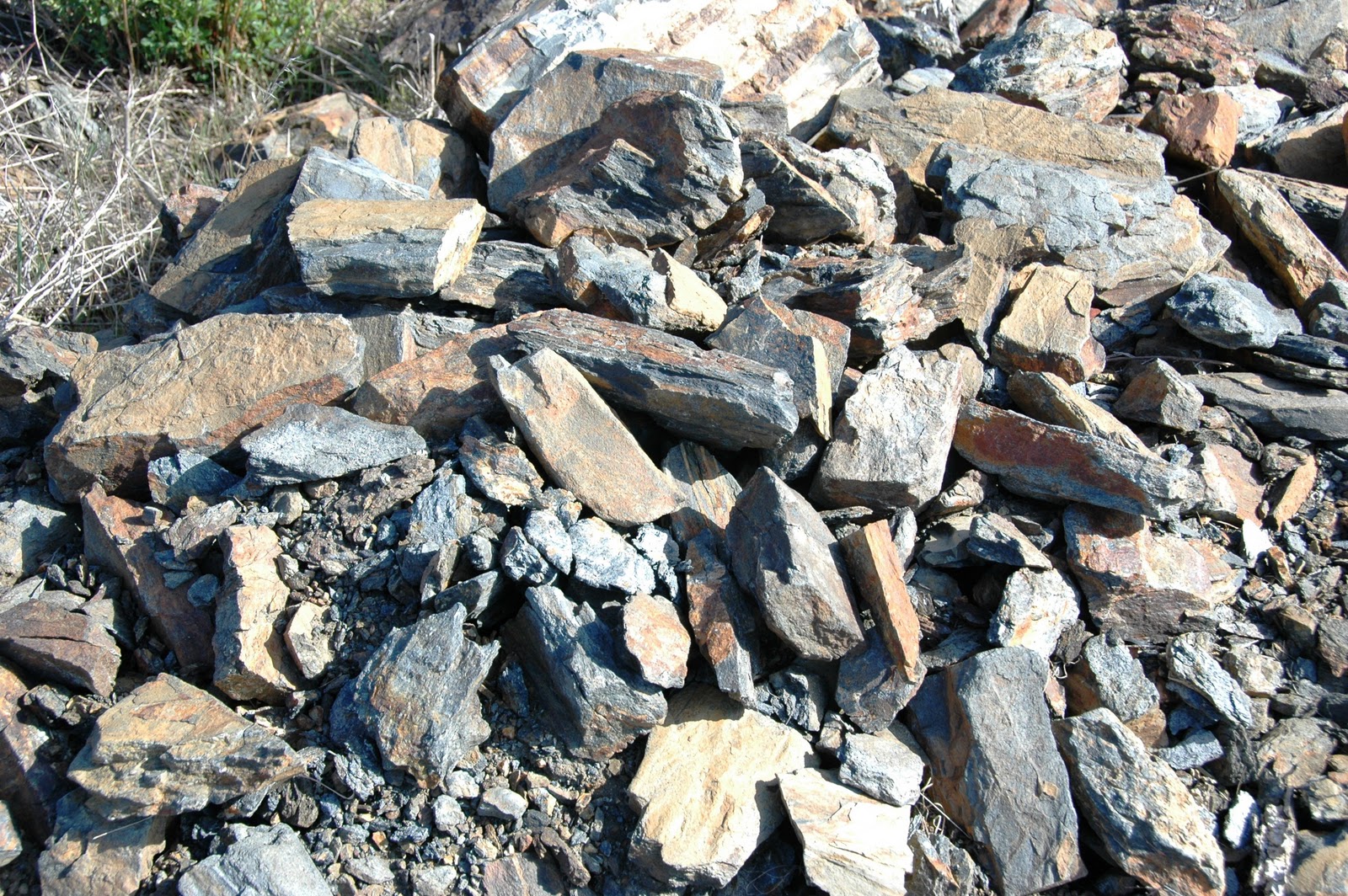
A root struggles through the slate

A biologist by training, Josep Lluís has the typical scientific enquiring mind. He wants to know whats, whens and whys of everything, and experiments tirelessly to improve, defying conventional wisdom, even now at 75. In the beginning (early 90s) he established his Clos Martinet – Martinet Bru wines in the first – second wine model of Bordeaux, using the best grapes for Clos Martinet. From the start, even being a big, dense, dark red wine as great Priorats usually are, Clos Martinet was one of the most elegant of the bunch. Martinet Bru was a good introduction wine at a more moderate cost.


But when in 2001 he surrendered the sceptre to his daughter Sara, she changed the concept. Wines would be single vineyard sourced, with the goal of expressing the terroir as much as possible. If her father is a scientist, Sara goes for philosophy.


Llicorella in Els Escurçons

Did Josep Lluís retire and relax after 2001? Not at all! He is very active experimenting and acting as consultant to other wineries, something he has done extensively in the last fifteen years. Present projects include making wine in unlikely countries like Egypt or Sweden. And if you meet him in his winery or at an event, he will ensnare you with fascinating descriptions of his methods and experiments, which include selective, timed watering of the vines, and closed circuit, anaerobic fermentation. A born teacher.

Mas Torrent, the vineyard of Martinet Bru
Nowadays Mas Martinet has four different plots and wines, as follows:
  • Martinet Bru comes from the vineyard of Mas Torrent, close to the Montsant DO, and planted with Garnatxa, Syrah and Carinyena. Grapes go to a separate facility, Mas Martinet Assessoraments. Relatively lighter, perhaps due to the vineyard’s closeness to Montsant; an excellent wine altogether.
  • Clos Martinet comes from the land around the winery. These are the vines at less height over sea level (200 m), with warmer nights and earlier ripening. A blend of Garnatxa, Carinyena, Cabernet Sauvignon and Syrah. Dark cherry, intense, more fruity than its cousins.

Serra Alta and the rain pool of Mas Martinet from Els Escurçons

  • Camí de Pesseroles comes from three neighbouring small plots along the path to Pesseroles. Two of them are planted with Garnatxa, and the other with Carinyena; all of them very old. Dark, mineral, concentrated, complex.
Els Escurçons
  • Els Escurçons (The Vipers) is a vineyard on top of a hill (600 m) with stunning views, including most of the plots of Mas Martinet. With increasing Garnatxa and decreasing Syrah grapes, it is lighter and more floral that Camí de Pesseroles.


Natural yeasts are used, and the wines ferment in concrete vats. Aging is done partially in oak foudres and partially in oak casks.


Serra Alta

There are two additional plots, Serra Alta and Mas Seró, used for experimental purposes and also to produce kosher wine. Serra Alta is remarkable because vines are planted more tightly and develop around iron rings of adjustable height. This disposition allows increasing by two thirds the number of vines per hectare and tripling the leaf surface, enhancing vine metabolism.


Weather monitoring at Serra Alta

All these are organically farmed, with the idea of giving back to the vineyard all that is taken away: skins, pips, stalks...except the wine, of course! Certification is expected soon.

In another post I may explain the other wines that Sara Pérez makes (not to mention her brother Adriá or her cousin Marc), alone or together with her partner, Rene Barbier Jr., son of the other great guru (imho) of Priorat. Guess what their children will be good at…


Sara Pérez


2011/03/21

Oriol Rossell Brut Nature Reserva de la Propietat 2006: Cava for castellers

 The December selection from the Vins Noè wine club brings usually Cava. This year was not different, and a few days ago I poured one of the bottles, Oriol Rossell Brut Nature Reserva de la Propietat 2006.

The composition is 70% Xarel•lo, 20 % Macabeu and 10 % Parellada, with 5 % of the Xarel•lo aged in oak. Vines are 40 – 50 years old, and there is a double grape selection: at the vineyard and just before pressing. Only the first juice is used. After second fermentation, bottles are aged for at least 45 months before degorjat.


Colour is pale yellow, with small, persistent bubble. In the nose I could find apple and pineapple, together with pastries, balsamic tones and toast. Complex and elegant, not too intense.

In the mouth is still fresh, in spite of the ageing, creamy, with well integrated gas and acidity.

Balanced and versatile, can be enjoyed by itself or with a full meal without red meat. Price at shop: around 28 EUR.


Oriol Rossell, the founder of the winery, passed away recently, and he was mourned not only by the wine people, but by the castellers as well, as he was also founder of the Castellers de Vilafranca del Penedès, and member of their Consell de Savis, Council of the Wise. But what are castellers? Easy: those that build castells.

Castells were inscribed in 2010 on the Representative List of the Intangible Cultural Heritage of Humanity. I now quote the description of UNESCO:

“Castells are human towers built by members of amateur groups, usually as part of annual festivities in Catalonian towns and cities. The traditional setting is the square in front of the town hall balcony. The human towers are formed by castellers standing on the shoulders of one another in a succession of stages (between six and ten). Each level of the tronc, the name given to the second level upwards, generally comprises two to five heavier built men supporting younger, lighter-weight boys or girls. The pom de dalt – the three uppermost levels of the tower – comprises young children. Anyone is welcome to form the pinya, the throng that supports the base of the tower. Each group can be identified by its costume, particularly the colour of the shirts, while the cummerbund serves to protect the back and is gripped by castellers as they climb up the tower. Before, during and after the performance, musicians play a variety of traditional melodies on a wind instrument known as a gralla, setting the rhythm to which the tower is built. The knowledge required for raising castells is traditionally passed down from generation to generation within a group, and can only be learned by practice. “


Castellers de Vilafranca at work

A pretty good description of a popular Catalan tradition that has special following in the wine zones close to Tarragona (with Valls as a center) and Penedès. Castellers de Vilafranca is one of the leading colles (groups) of castellers, toghether with those of Valls.

I can only encourage you to visit those parts, taste their wines and look up at the castells that rise amid the sounds of the gralles (see video below). An experience not to be forgotten.


2011/03/15

Three generations in thirteen years at Mas Foraster


In the outskirts of the beautiful medieval town of Montblanc, walled since the 14th century and seat to a dukedom, sits the winery and vineyards of Mas Foraster. My wife and I had to attend a calçotada in the zone later in the day and we took the opportunity to visit one of my favourite wineries of DO Conca de Barberà.

Eating calçots
(For those of you unfamiliar with calçotades: in the lands around Tarragona, mainly around Valls, it is typical to gather in winter to eat calçots, young onions that are in fact slightly burned by a dried vine shoot fire. Eaters peel with bare fingers the burnt outer layers to expose the juicy, tender inside, which is then dipped in a special sauce and taken dripping to the mouth, with a vertical entry. A giant bib saves the shirt. A rustic yet delicious meal, a feast for onion lovers, followed by sausages and lamb, topped with crema catalana and wetted with red wine and Cava).


Ricard Sebastiá and his mother, Julieta Foraster

Since 150 years, the Foraster family has grown vines. Not until 1998 Josep Foraster took over from his father and decided to make and sell quality wine himself. Unfortunately, he died prematurely, just before the first bottles of his wine hit the market. But his sister Julieta carried on, and now her son Ricard Sebastiá is at the helm, reaching the goals his uncle had dreamed up.

The property has 32 hectares (a little over 79 acres) of vineyards at about 400 m of altitude, with wide temperature differences between day and night. Soils are largely sandy, with slate on the surface. Vines are generally trellised. Harvest is done mainly by hand. Output per vine is around 0.8 and 3 kg of grape; and 2’500 to 6’000 kg of grape per ha. Total yearly production is around 100’000 bottles, with a maximum of 140’000.

The winery houses a small but delightful museum of rural life and winemaking as it was a century ago, together with temporary exhibitions of modern artists.

Mas Foraster wine range starts with the white Josep Foraster Blanc Selecció. Garnatxa blanca and Macabeu, with a little Chardonnay, is partly fermented and kept in steel vats and partly in French oak, with batonnage. In this way the wine is complex, with a properly integrated wood, but fresh at the same time. Unctuous and long.

Josep Foraster Collita is a young red wine of the year made from Ull de Llebre (aka Tempranillo) and a little Cabernet Sauvignon. Grapes are picked slightly underripe to accentuate freshness. The resulting wine is fruity, refreshing, easy to drink, with deep cherry colour with bluish overtones.

Josep Foraster Criança is for me the flagship wine of Mas Foraster. Coming from Cabernet Sauvignon and Ull de Llebre, with Syrah occasionally, it is aged for twelve months in French oak, and additionally twelve more in the bottle. A more complex wine, dark cherry with little evolution. Red and black fruit in the nose; also spices at the end. Full mouth, with rounded tannins.

Josep Foraster Selecció is the top wine of Mas Foraster. Produced only in selected years out of the oldest (20+ years) Cabernet Sauvignon vines, harvested in 20 kg boxes, with about 10 % Ull de Llebre. After the aging of 18 months in French oak and a similar time in bottle, the result is a dark red wine, with brown edges and good legs. Red fruit, wood and spice in the nose. Well structured and silky in the mouth. Limited production of around 4’000 numbered bottles.

Last wine in the market is Josep Foraster Trepat, made from 45 year old Trepat vines. This is a local variety, with medium colour intensity, a distinctive black peppery nose and great elegance. Five months of aging in French oak.

I guess that Josep Foraster, if he had the opportunity to look upon his winery, would be proud of the evolution.

http://www.doconcadebarbera.com/catalan/frame.htm


2011/02/28

Alella Vinicola: looking forward


Alella Vinícola is the historic reference of the Alella DO. It was founded in 1906 as a cooperative in the wake of the Phylloxera disaster. A cellar was built in the Modernist or Art Noveau style by the architect Jeroni Martorell.

The coop gradually incorporated some 90 % of the vines on the Alella village, and acted as an avant la lettre regulation council, defending the prestige of Alella wines and fighting counterfeiting, that became rife after receiving the King of Spain’s seal of appointment in 1928. In this time Alella white was branded “Marfil” (“Ivory”) because of the colour of the wine.
 
After Spanish Civil War, production, trade and counterfeiting resumed as usual until in 1953 the Alella DO was created. In the meantime, Jeroni Martorell had effected an enlargement of the winemaking facilities. The boom continued well into the 70’s, when large scale housing project started to eat into the vineyard surface and vinegrowers settled for the easy money of selling their lands. Grape production declined from ca. 3 million kg to around 200’000 kg.
 
The coop struggled for survival in the 80’s and 90’s, with timid attempts at modernization, but nothing important changed till 1998, when it was sold to private investors.
 
Since then change rhythm has stepped up. Vines were planted, winemaking facilities improved, bottles and labels changed, and new wines have been introduced or, in some cases, recovered from the past. More on that later.
 
Not surprisingly soils and weather are those typical for DO Alella: sandy and comparatively dry in terms of rain, but with wet breezes blowing inland from the sea.
 
Plots and grape varieties are allocated as follows: 
  • Pansa blanca (aka Xarel.lo) at Can Sala, plot at 200 meters over sea level. 13’000 vines were planted in 2001. 
  • Syrah in Rials Valley, in four plots at heights between 200 and 400 m. 12’000 vines from 2001 and 2002. 
  • Cabernet Sauvignon and Merlot in terraces at heights between 200 and 350 m at Rials Valley. Some 15’000 plants from 2001. 
  • La Molassa at the top of the Rials Valley, facing the sea, and with ca. 10’000 vines of Moscatell (2004) and Garnatxa negra (2003). 
  • Mas Coll, at the top (350 to 500 m) of the hills of the same name. The sandy soil (sauló) is a trifle more acidic than in other properties, and temperatures more extreme. Planted in 2003 with Garnatxa negra, Syrah, Monastrell and Carinyena, with a total of 25’000 vines. 
  • Vinyes velles, a scattering of old vineyards that have survived till now: Pansa blanca, Pansa Vermella, Malvasia, Sumoll, Garnatxa peluda and Garnatxa negra. 
All these lands produce 80 % of grapes used: the rest is sourced from some of the former cooperativists, which have had to adapt their farming methods and gear them towards quality and organic principles. 
 
Grapes are collected manually in 25 kg boxes and refrigerated till processing. Stalks are taken back to the vineyards: production is not fully organic…yet. 
 

White wines have been the specialty of Alella. The Marfil Blanc Classic is 100% Pansa blanca and a wine very easy to drink, crisp, unctuous, with floral and white fruit aromas and a note of sweetness. The drier Marfil Blanc Sec has the same composition but less character. The Ivori Blanc is a more complex blend with Pansa blanca, Chardonnay, Garnatxa blanca, Sauvignon blanc and Moscatell, and oak aging.  
 
As for rosé wines, they produce Mayla, an onion skin coloured blend of Pansa blanca and Syrah, fruity and with a hint of gas and Marfil Rosat, from Garnatxa negra and Syrah. 
 
There are three reds. Marfil Negre, Cabernet Sauvignon, Merlot, Garnatxa negra and Syrah, and aged for twelve months in French oak. Ivori Negre, from Garnatxa negra, Syrah and Cabernet Sauvignon, from selected plots in the Rials Valley, and fourteen months in French oak. Vallmora, coming from old vine Garnatxa negra and over a year of oak. 
 
As many other wineries, Alella Vinícola produces Cava; both Brut and Brut Nature Marfil. But more original are the sparkling wines under DO Alella, that differ in the elaboration: first fermentation is stopped by cold before sugar is completely used up, and resumes in the bottle. Besides, there are two of these wines made from Garnatxa negra, unusual in sparkling: Marfil Escumós Rosat Brut and Marfil Escumós Blanc de Negre Brut. Both have the typical aromas of red fruits in a sparkling; a surprise. Also worth trying are the Marfil Escumós Blanc Brut Nature (Pansa blanca / Chardonnay) and Marfil Escumós Moscatell Dolç, a sweet dessert bubbly. 
 
But perhaps the most personal wines are the soleras, made with this oxidative method. There are four wines. Two of them started their solera in 2003, reviving long-lost wines. Sweet Marfil Violeta is made from 100% Garnatxa negra and has indeed a cherry-violet colour. Marfil Molt Dolç, as his older brothers Marfil Generós Semi and Marfil Generós Sec, with soleras dating from 1976, are 100 % Pansa blanca and range from very sweet to dry, but always with balancing acidity that makes them very fresh in the mouth. The usual oxidative aromas of dry fruits together with chocolate, toast and citrics are predominant in the nose. 
 
Alella Vinícola is becoming very active in the Enotourism sector, with special visits, a restaurant located in the winery, and above all collaboration with the Cella Vinaria, a former Roman settlement with winery where wine production as Romans did it is being reconstructed. 
 
For me, Alella Vinícola is right now interesting especially for its Marfil Blanc Classic and its soleras. Also the DO Alella sparklings show potential. The other wines are nevertheless good value and will probably develop when vines are older. I also expect them to take more advantage of existing old vines that can surely yield wines with greater appeal.


2011/02/22

Ètnic 2006

Today I start a new kind of post, evaluating more in depth a wine I have recently tasted. There are some other blogs that usually take this approach with proficiency, such as Els vins que vaig tastant and Els vins del Bonviure (both in Catalan, but with automatic translator).

Here I face a typical dilemma, that recently came up in Els vins del Bonviure: shall I write negative reviews of wines? After thinking it out, my intention is not to do so unless I am sure that the flaws found are really present in most of the bottles and not a result of bad cellaring, my own clumsy tasting capability or simple bad luck. This means in practice that I should find similar problems in two independent bottles (not coming from the same source or stored in the same way) to make a negative report. A single unsatisfactory bottle will generate no remarks.

Another matter is a wine that, without actually showing flaws, does not deliver according to its fame or price. In these cases, with due allowance for my inexpert tasting, I may try to explain how and why I am disappointed.

Do you agree with this approach? Should I do otherwise? Please feel free to comment!

And now to the wine.

Ètnic is a red wine from DO Montsant. It is produced in the facilities of Celler el Masroig, following the directions of a group of people that includes some wine shop owners with no direct experience in winemaking. This 2006 is the first vintage. It comes from old Samsó (aka Carinyena) and Garnatxa vines. Curiously enough, the vineyards are actually sited in neighbouring DOQ Priorat soil. It was aged for fourteen months in French oak. Alcohol content of 14.5 % in a black Burgundy bottle.

The result is a very dark cherry red wine, with slow dark legs. In the nose, after some time in the glass (decanting is highly recommended), it opens to release black ripe fruit, balsamic wild herbs, hints of red fruit, chocolate, yoghourt.

Structure in mouth is big, with adequate acidity and notes of minerality. Tannins and alcohol are well integrated into a silky feel. Long finish.

At a retail price around 13 to 15 EUR in Catalonia, it gives good value. The trick is to find it, as production is very limited.

A wine to follow in coming years to see if it confirms the good start.


2011/02/15

Espectacle by Selecció Ingrid at Auditori

Fifteen months ago I had the luck to be invited to enter the GMT, which has nothing to do with Greenwich or time, but rather surprisingly stands for Grup de Matemàtics Tastavins, or Mathematician Winetasting Group. The other five members are Maths Professors in the Autonomous University of Barcelona (I am a pharmacist by training). I had longed for years to become part of a tasting group, but somehow the expected background of its members did not include this specific profile. Nevertheless, no formulas or equations are needed for the tasting we do: it is basically hedonistic (three different bottles for six people), and we do not rate the wines apart from an informal “Which one do you like best?”

Led by a master wine blogger, Jaume Aguadé of Vins de Catalunya, we have had some memorable sessions; among them the one last week. We tasted three wines that had in common coming from very old Garnatxa negra vines:

  • Auditori 2008, Acústic Celler, DO Montsant
  • Espectacle 2006, Espectacle Vins, DO Montsant
  • Vinyes Altes Selecció Ingrid 2005, Clos Dominic, DOQ Priorat

All three were decanted one hour before the tasting. An additional hour would have been welcome.

Albert Jané, from the family that owns Jané Ventura in DO Penedès, moved to DO Montsant to start his own project, Acústic Celler, in the village of Els Guiamets. Using 60+ year old garnatxa vines (aptly described as “magical old vines” in the label) coming from three small plots with poor sandy soils, and with thirteen months in French oak, Auditori is the top product of the winery.  


It was the youngest of the three wines; it showed in its dark, intense colour with still bluish overtones in the rim, and the comparative lack of tertiary aromas. But anyway the nose was overwhelming, kaleidoscopic, with lots of fruit (mainly red) and spice (at one moment it positively smelt like a pepper-pot) developing over the two hours that we enjoyed tasting. In the mouth acidity and tannins were very present, but rounded and integrated, with length and width. A great wine, and no doubt that a few years in the bottle will help to develop its full potential.

Espectacle Vins is a joint venture of the Barbier and Cannan families, of Clos Mogador and Clos Figueras fame, to make wine from a centenary Garnatxa vineyard in Montsant. The wine is actually produced in the Celler Laurona winery, partially owned also by the Barbiers. Once the fruit is ripe, it is harvested manually in small boxes and kept for one day at 4ºC. After berry selection and gentle pressing the grapes go to a new French oak vat where both alcoholic and malolactic fermentations take place; afterwards the wine is aged for some fifteen months. 


Cherry to crimson in colour, with medium intensity, the nose is extremely complex, with layers of black and red fruit, tobacco, balsamic notes. It fills the mouth but silkily, with great elegance and finesse. 


Espectacle is an intellectual wine. This is a nectar to enjoy reflectively, putting forth all one’s senses, not carelessly. Supremely subtle and elegant, it needs time and wrist work to release its complexity. 


As explained in a previous post, Clos Dominic is a small family-run winery in Porrera, DOQ Priorat. The best cask from its century old Garnatxa vines in La Tena vineyard goes into the Vinyes Altes Selecció Ingrid, named after one of the daughters of the owners, Dominic Bairaguet and Paco Castillo. Fermented with its own wild yeasts, it is aged for eighteen months in French oak. 


Colour is similar to Espectacle, but with higher intensity. The nose is very particular, probably in part due to the non-standard yeasts. Red and black fruit, wild balsamic herbs (rosemary, thyme, all those that grow in and around La Tena), spices, liquorice, cigar box, cocoa, the lot. 
Ingrid Castillo Bairaguet ready to pour for Jay Miller

The mouth is packed with flavour, good acidity, ripe tannins, and the minerality coming from the slatey soil. Round, very long. A wine that impacts the senses. A wine to be enjoyed shamelessly, boisterously.

Towards the end of the tasting, as mentioned before, the question of which was the best of the three came up. As a backdrop, Parker ratings: 94 for Auditori 2008, 96 for Espectacle 2006, and no rating for Clos Dominic Selecció Ingrid…yet.

Auditori was handicapped by its youth, and the jury is still out about the other two. Espectacle or Ingrid? As somebody said, Audrey Hepburn or Marilyn Monroe? George Clooney or Brad Pitt? Rolls Royce or Lamborghini? Probably depends on when, where, with whom, with what…although I have always loved Lambos…


http://www.domontsant.com/
http://www.espectaclevins.com/default.asp?pag=230
http://debrujasyvino.blogspot.com/
http://www.cellerlaurona.com/index.php?i=1
http://www.closmogador.com/
http://closfigueras.com./site/?lang=en